

How to Choose the Right Cashew Grade for Your Needs
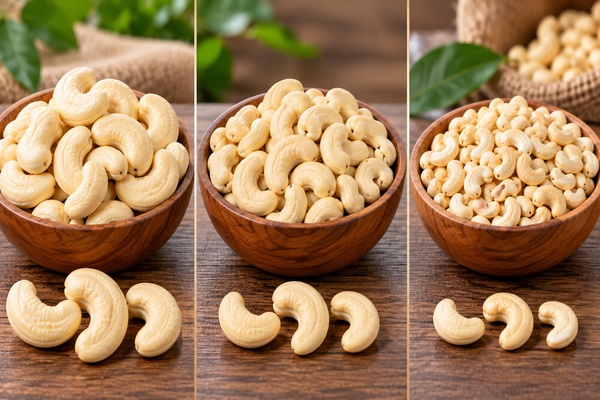
Choosing between W180, W240 and W320 cashews becomes easier when you understand what the grade numbers mean. All three are whole cashew grades, but their kernel sizes differ. This affects how the cashews look in a gift box, snack pack or finished dish.
For retailers, dry-fruit shops and food businesses in Gujarat, the right grade depends on customer demand and the final use. A premium gift pack may need larger kernels for presentation. An everyday retail pack may need a balance between size and buying cost. A kitchen may choose a grade based on the recipe.
However, a larger cashew does not automatically mean a fresher or better batch. Taste, storage, packaging and processing also matter. This guide compares W180 vs W240 vs W320 cashews and explains what to check before buying for your home or business.
Quick answer: Choose W180 when large kernels and premium presentation matter. Consider W240 for a balance of size and everyday use. Choose W320 when smaller whole kernels suit your snack packs or recipes. Check sample quality and the current quotation before deciding.
What Do W180, W240 and W320 Mean?
Cashew grade numbers refer to kernel count per pound, rather than per kilogram. One pound is about 454 grams.
In standard white-whole grading, W or WW identifies white whole cashews. The number indicates a size category based on how many kernels fit into that weight. A lower count means larger individual kernels.
The practical rule is:
- W180: Largest kernels among these three grades
- W240: Kernels between W180 and W320 in size
- W320: Smaller kernels than W180 and W240
The number is a grade category, not a promise that every pack contains exactly that number of kernels.
Also confirm the supplier’s full product description. If a quotation uses W, WW, SW or another label, ask what it means for the offered batch.
W180 vs W240 vs W320 Cashews: Comparison Table
| Buying Factor | W180 Cashews | W240 Cashews | W320 Cashews |
| Relative kernel size | Largest of the three | Medium-large | Smaller of the three |
| Kernels in the same weight | Fewer | More than W180 | More than W240 |
| Visual effect | Large, prominent kernels | Noticeable whole-kernel appearance | Smaller whole-kernel appearance |
| Possible uses | Premium gifting and large-kernel snack packs | Retail packs, gifting and snacking | Everyday packs, snacks and cooking |
| Buying priority | Presentation and large size | Balance of size and cost | Smaller whole kernels and cost planning |
| Quality check | Freshness, uniformity and breakage | Freshness, uniformity and breakage | Freshness, uniformity and breakage |
These uses are buying suggestions. Your customers, recipes and sample trials should guide the final choice.
When Should You Buy W180 Cashews?
W180 cashews suit buyers who want large whole kernels to be clearly visible.
They can work well in premium dry-fruit packs, gift boxes and snack products where appearance matters. Larger kernels can create a fuller visual impression when arranged in a small tray or box.
Consider W180 when:
- Customers specifically ask for large kaju.
- Your product is sold as a premium gift.
- Whole-kernel appearance affects the buying decision.
- You need prominent cashews for serving or decoration.
- Your selling price can support the purchase cost.
Before ordering, check that the batch has a consistent appearance. A large grade with excessive breakage may not meet your presentation needs.
If the cashews will be ground into a paste, compare other suitable grades before paying for large whole kernels.
When Should You Buy W240 Cashews?
W240 cashews can suit buyers who want a noticeable whole-kernel size without choosing the largest option.
Retailers can consider this grade for regular snack packs, dry-fruit assortments and gifting. Food businesses may also use it when whole cashews remain visible in the finished product.
W240 may suit your needs when:
- Customers want reasonably large whole cashews.
- You sell both everyday and gift packs.
- You want to compare size against the available quotation.
- Your recipes need visible whole kernels.
- You prefer to stock a versatile whole grade.
For a retail store, W240 can be tested alongside another grade to see which customers prefer. Compare actual sales rather than assuming that one size will suit every buyer.
When Should You Buy W320 Cashews?
W320 cashews are smaller than W180 and W240, but they still belong to the whole-kernel category.
They can suit everyday snacking, retail packs and recipes where larger kernels are unnecessary. Smaller whole kernels may also be useful when you want more individual pieces within the same pack weight.
Consider W320 when:
- Customers prefer smaller whole kaju.
- You are planning everyday retail packs.
- The final dish does not need large kernels.
- You want to compare the cost of whole grades.
- Your product needs whole cashews in a smaller size.
Check quality with the same care used for larger grades. W320 is a size category, not a label for poor-quality cashews.
Does a Larger Cashew Always Taste Better?
Kernel size alone cannot tell you how a cashew batch will taste.
Taste and texture can change with freshness, processing, roasting and storage. A well-handled W320 batch may be more pleasant to eat than a poorly stored W180 batch.
When comparing samples, check:
- Natural smell
- Pleasant taste
- Texture
- Signs of staleness
- Consistency across the sample
- Suitability for your product
For a fair comparison, taste samples in the same form. Comparing plain cashews with salted or roasted cashews makes it harder to judge the effect of grade.
Choose the size for its purpose, then confirm the eating quality separately.
Which Cashew Grade Is Best for Gifting?
For gifting, start with the look you want and the amount you can spend.
W180 can suit gift packs that highlight large kernels. W240 may suit packs where you want a noticeable whole-cashew appearance at a different buying cost. W320 can also be used when smaller whole kernels fit the pack design.
| Buying Factor | Grade to Consider |
|---|---|
| Large kernels as the main visual feature | W180 |
| Medium-large kernels in a mixed dry-fruit box | W240 |
| Smaller whole cashews in an everyday gift pack | W320 |
| A strict cost limit | Compare suitable grades using current quotations |
Test the cashews in the actual box before ordering in bulk. Tray depth, pack weight and the way the kernels are arranged all affect presentation.
Which Grade Should Retailers in Gujarat Stock?
Retailers should choose grades based on their customer mix.
A store serving premium gifting customers may need a different range from a grocery shop selling small daily-use packs. A shop supplying sweet makers may also need split or broken cashews.
Before deciding, review:
- Your fastest-selling pack sizes
- Requests for large or smaller kaju
- Sales during normal weeks
- Gift-pack demand
- Available storage space
- How quickly each grade sells
You could begin with one everyday grade and one larger grade, then adjust according to sales. Keep the grade descriptions clear so customers understand the difference.
For stores in Ahmedabad, Gandhinagar, Surat, Vadodara and other Gujarat markets, local demand should guide stock planning.
Common Cashew Grade Buying Mistakes
Treating the Grade Number as a Quality Score
W180, W240 and W320 mainly help describe kernel size. Freshness and batch quality need separate checks.
Paying for Large Kernels That Will Be Ground
Compare suitable smaller, split or broken options when the whole shape will disappear during preparation.
Comparing Different Product Categories
White whole and scorched whole cashews should not be treated as identical offers. Confirm the complete grade description.
Ordering Without Testing Customer Demand
Start with a manageable quantity when introducing a new grade.
Ignoring Packaging and Storage
The selected grade still needs suitable protection during transport and after delivery.
A Simple Cashew Grade Buying Checklist
| Question | What Your Answer Helps Decide |
|---|---|
| Will the cashews be sold whole? | Whether whole-kernel presentation matters |
| Do customers ask for large kaju? | Whether to consider W180 or W240 |
| Will the cashews be ground or chopped? | Whether other grades could suit the use |
| What pack size will you sell? | How the kernels look in the finished pack |
| How quickly will the stock sell? | Suitable order quantity |
| Have you approved a sample? | Whether the batch meets your needs |
| Are quotations comparable? | Whether the cost comparison is fair |
| Are storage conditions suitable? | Whether quality can be maintained |
Discuss Your Cashew Grade Requirements with Keshar Cashewnuts
Keshar Cashewnuts offers whole, split and broken cashew varieties from its facility in Santej, Gujarat.
Share your intended use when asking about W180, W240 or W320 cashews. Explain whether you need stock for retail packs, gifting, snacks or food production.
Ask the team to confirm the exact grade description, current availability, packaging and quotation. This helps you compare the offered product with your buying requirements.
Visit Keshar Cashewnuts to view the range or send an enquiry with your grade, quantity and delivery location.
Frequently Asked Questions
The main difference is kernel size. W180 has larger kernels than W240, while W320 has smaller kernels than both. Compare freshness and quality separately.
The number relates to kernel count per pound. Larger kernels take up more weight individually, so fewer fit into the same total weight.
Consider W180 if large-kernel presentation is your priority. W240 may also suit your pack design. Test a sample in the actual box before ordering.
Yes. W320 whole cashews can be used for snacking and retail packs. Check taste, freshness and handling quality before buying.
No. Size alone does not determine taste. Freshness, processing, roasting and storage affect the eating experience.
Choose according to the recipe. If the cashews will be ground, suitable split or broken grades may also work. Compare samples through a small production trial.
Confirm the full grade description, sample quality, acceptable breakage, packaging, quantity, total cost and delivery terms. Record the agreed details before placing the order.