

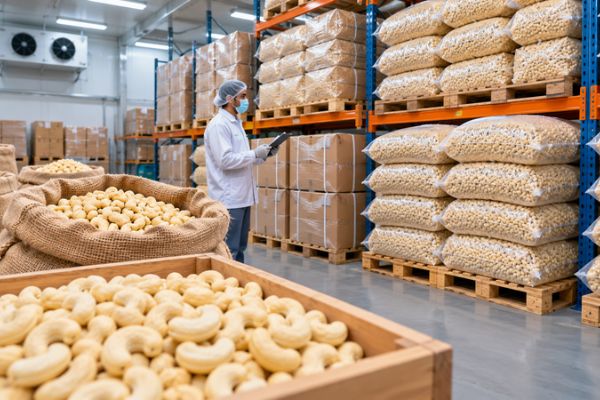
Bulk Cashew Storage Guide for Retailers and Food Businesses
Knowing how to store cashew nuts in bulk helps protect the stock you have paid for. Fresh cashews can lose their pleasant taste and smell when exposed to heat, moisture, air or strong odours. Poor storage can also lead to damaged packs, pest problems and customer complaints.
For dry-fruit retailers, sweet shops, bakeries and food businesses in Gujarat, buying the right cashew grade is only the first step. The way you receive, store, open and handle each pack also affects quality. A good batch can suffer if it sits near a hot oven, on a damp floor or in a loosely closed container.
You do not need a complicated system to improve storage. Start with suitable packaging, a clean storage area and clear batch records. This guide explains practical ways to keep whole, split and broken cashew nuts fresh while managing bulk stock.
Quick answer: Store bulk cashew nuts in properly sealed, food-grade packaging in a cool, dry and clean area. Keep the packs away from sunlight, moisture, heat, pests and strong smells. Follow the supplier’s storage instructions and use stock with the earliest best-before date first.
What Makes Cashew Nuts Lose Freshness?
Cashews contain natural oils. Over time, exposure to air and heat can cause these oils to change, giving the nuts an unpleasant smell or taste. This is called rancidity.
Moisture creates another problem. It can affect texture and may encourage spoilage when storage conditions are poor.
Cashew quality can decline because of:
- Open or damaged packaging
- High storage temperatures
- Moisture entering the pack
- Direct sunlight
- Long storage after opening
- Dirty containers or handling tools
- Insects and rodents
- Nearby products with strong smells
Storage works best when you control these risks together. A tightly sealed pack still needs a suitable place to sit.
Inspect Bulk Cashews as Soon as They Arrive
Good storage begins at delivery. Check the shipment before placing it with your existing stock.
Look for torn bags, loose seals, crushed cartons and signs of water exposure. Confirm that the grade and quantity match your order.
Cashew Receiving Checklist
- Count the packs and cartons.
- Inspect outer packaging and seals.
- Check for moisture marks or pest damage.
- Confirm the batch or lot details.
- Read the stated storage instructions.
- Record the best-before date, where provided.
- Check representative packs according to your agreed inspection process.
- Keep questionable stock separate.
Take clear photographs of damaged packaging and contact the supplier promptly.
Do not pour stock from a damaged or questionable pack into a container holding good cashews. Keep batches separate while the issue is checked.
Choose a Cool, Dry Storage Area
The best storage location is away from heat, damp surfaces and direct sunlight.
For shops and kitchens in Gujarat, pay attention to seasonal changes. A room that stays dry during one part of the year may become damp during rainy weather. A shelf near a window may also become much warmer in the afternoon.
Avoid storing cashews:
- Beside ovens, stoves or hot equipment
- Under a leaking roof
- Near sinks and washing areas
- Against damp walls
- In direct sunlight
- In areas with large temperature changes
Check the supplier’s recommended storage conditions. If those conditions cannot be maintained in your room, discuss a suitable storage method before buying a large quantity.
A room thermometer and humidity meter can help you spot changes that are difficult to judge by touch alone.
Keep Unopened Packs Properly Sealed
If the original pack is intact and suitable for storage, keep it closed until you need the cashews.
Opening every pack for convenience exposes more stock to air and handling. Instead, open only the quantity needed for current sales or production.
Some bulk cashews may come in vacuum or protective-atmosphere packaging. Once opened, that protection is reduced. Follow the supplier’s guidance for handling the remaining stock.
| Pack Condition | Recommended Action |
| Unopened and undamaged | Store according to the pack instructions |
| Opened and still in use | Reseal properly or transfer to a suitable container |
| Torn or punctured | Separate and assess the stock before use |
| Wet or pest-damaged | Keep aside and contact the supplier |
| Seal condition unclear | Inspect and confirm whether the pack remains suitable |
A clip or folded bag may not provide the same protection as a proper seal. Choose a closing method that suits the packaging.
Use Food-Grade Containers for Opened Stock
Opened cashews need a clean container that closes tightly.
Choose containers intended for food storage. Avoid reusing containers that previously held chemicals, cleaning products or strong-smelling materials.
Before filling a container:
- Clean it using a suitable method.
- Allow it to dry fully.
- Check the lid and sealing surface.
- Add only stock that has passed your quality checks.
- Label the container with the product and batch details.
Leftover water in a washed container can introduce moisture into otherwise dry cashews.
Also avoid repeatedly topping up an old batch with a new batch. Finish or separate the earlier stock, then clean and dry the container before refilling.
Divide Bulk Stock into Smaller Working Portions
Opening a large bulk pack many times exposes the remaining cashews to air and handling.
For busy shops and commercial kitchens, smaller working portions can make stock easier to manage.
For example, a bakery can keep the main batch sealed and move only its planned working quantity into a smaller container. A retailer can follow a similar method for packing daily orders.
This approach helps:
- Reduce repeated opening of the main stock
- Keep handling more organised
- Limit exposure during busy periods
- Make batch tracking easier
- Reduce accidental mixing
Choose the working quantity based on actual sales or production. Do not leave more stock open than your business needs.
Protect Cashews from Strong Smells
Cashews can pick up unwanted odours from nearby products.
Keep them away from strong-smelling spices, perfumes, cleaning liquids, fuels and waste areas. This matters even when the storage space looks clean.
A small retail shop may store many products in one room. Use separate shelves or storage zones, and keep food stock apart from cleaning supplies.
Check both the room and the container. A clean-looking container that smells of its previous contents is unsuitable for cashew storage.
Keep Packs Off the Floor and Leave Space for Inspection
Place cashew packs on clean shelves or suitable pallets. Keeping stock off the floor reduces contact with dampness and makes cleaning easier.
Leave enough space to inspect the storage area. Packs pushed tightly against walls can hide leaks or pest activity.
A practical storage layout should allow you to:
- Clean under and around the stock
- Read batch labels
- Reach older stock easily
- Inspect walls and pack surfaces
- Spot damaged cartons
- Remove affected stock without moving everything
Avoid stacking packs so high that lower cartons are crushed. Follow the packaging supplier’s stacking guidance where available.
Common Bulk Cashew Storage Mistakes
Leaving Bags Open Overnight
An open bag exposes the cashews to air, moisture and pests. Close it properly after use.
Filling a Container Before It Is Dry
Water left after cleaning can affect the stock. Dry containers fully before refilling.
Mixing New and Old Batches
Mixed batches make it harder to track dates and investigate quality issues.
Storing Cashews Beside Heat Sources
A convenient shelf near an oven or sunny window may be unsuitable for long-term storage.
Ignoring Damaged Seals
A small hole can reduce the protection offered by the packaging. Check it promptly.
Buying More Than the Storage Area Can Handle
Overcrowded shelves make cleaning, inspection and stock rotation harder.
A Ready-to-Use Bulk Cashew Storage Checklist
| Checkpoint | What to Confirm |
| Delivery condition | Packs are dry, clean and undamaged |
| Storage area | Away from heat, sunlight and dampness |
| Packaging | Suitable and properly sealed |
| Opened containers | Food-grade, clean, dry and tightly closed |
| Working stock | Limited to the quantity currently needed |
| Odour protection | Away from chemicals and strong smells |
| Shelf position | Off the floor and easy to inspect |
| Batch records | Grade, dates and lot details are recorded |
| Stock rotation | Earliest best-before stock is used first |
| Quality checks | No signs of spoilage or pest activity |
| Cold storage | Supplier guidance and moisture control are followed |
Discuss Cashew Storage and Bulk Supply with Keshar Cashewnuts
Keshar Cashewnuts offers whole, split and broken cashew varieties from its facility in Santej, Gujarat.
When enquiring about bulk supply, explain how quickly you expect to sell or use the stock. Share your storage conditions and preferred pack sizes so you can discuss suitable options.
Before confirming an order, ask about:
- Available cashew grades
- Bulk packaging options
- Product storage instructions
- Stated shelf life
- Handling after opening
- Delivery arrangements for your location
Visit Keshar Cashewnuts to view the product range or send an enquiry with your quantity and packing requirements.
Frequently Asked Questions
Keep cashews in sealed, food-grade packaging in a cool, dry and clean area. Protect them from heat, sunlight, moisture, pests and strong smells. Follow the instructions supplied with the product.
Yes, if the packaging is intact and suitable for storage. Keep unopened packs sealed until needed. Once opened, reseal properly or use a clean, dry food-grade container.
Refrigeration may suit longer storage or warm room conditions. Check the supplier’s advice for your product and packaging. Keep cold-stored cashews sealed to protect them from moisture and odours.
Use tightly closed containers, limit repeated opening and keep only a small working quantity available. Record the opening date and follow the supplier’s guidance for opened stock.
Look for unusual smells, dampness, visible mould, pest activity or changes from the batch’s normal condition. Keep questionable stock separate. Do not taste cashews that show signs of spoilage.
Ask about the grade, packaging, storage instructions, stated shelf life, delivery time and handling after opening. Choose an order quantity that matches your sales and suitable storage space.
Yes. Retailers can contact Keshar Cashewnuts with their required grade, quantity, packing needs and Gujarat delivery location. Confirm availability and supply terms before placing the order.