
Small Whole Cashews for Snacks Sweets and Food Manufacturing
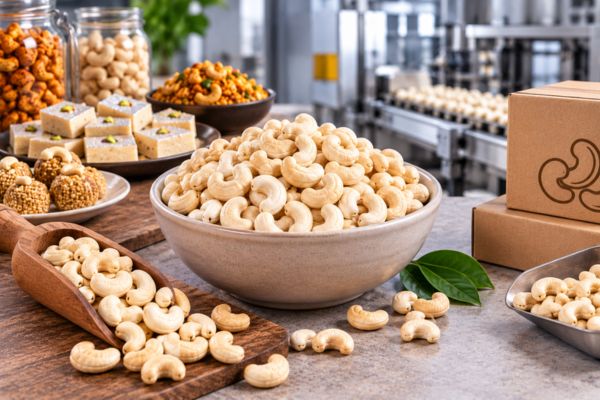
Cashews are used in everything from everyday snacks and traditional Indian sweets to bakery products and large-scale food manufacturing. While large cashew kernels are often chosen for premium presentation, they are not necessary for every food application.
This is where Small Whole Cashews can be a practical choice.
Small whole cashews retain their complete kernel shape but are smaller in size than larger whole cashew grades. For food businesses, the right choice depends on how the cashews will be served, processed, packed, or used in a recipe.
For snack manufacturers, sweet shops, bakeries, restaurants, caterers, and food-processing businesses in Gujarat, understanding the use of small whole cashews can help make better purchasing decisions.
What Are Small Whole Cashews?
Small whole cashews are complete cashew kernels that fall into smaller size grades.
Unlike broken cashews, the kernel remains whole. The main difference is its size and the number of kernels that may fall within a particular grading specification.
Small size does not automatically mean that the cashew is unsuitable for commercial use. The right cashew depends on the product being manufactured.
For example, a business selling large premium cashews as a standalone product may prefer a larger grade. A snack or sweet manufacturer may have completely different requirements.
Are Small Whole Cashews Different From Broken Cashews?
Yes.
The key difference is the condition of the kernel.
Small Whole Cashews retain their whole shape, whereas broken cashew grades consist of pieces.
This difference matters when the cashew remains visible in the finished food product.
Whole cashews may be preferred when appearance is important. Broken cashews can be more suitable when the kernels will eventually be chopped, crushed, ground, or blended.
Businesses should therefore select the grade based on the final application rather than size alone.
Why Do Food Businesses Use Small Whole Cashews?
Commercial food businesses usually consider several factors when choosing ingredients: appearance, taste, consistency, processing requirements, and cost.
Small whole cashews can be considered for products where businesses want a complete cashew kernel but do not necessarily require a large premium-sized kernel.
They can be useful for:
- Roasted cashew products
- Flavoured snacks
- Traditional sweets
- Bakery products
- Restaurant dishes
- Catering preparations
- Namkeen and snack mixes
- Packaged food products
- Food manufacturing
The exact grade should always be selected according to the finished product.
Small Whole Cashews for Snacks
Snacking is one of the most natural applications for whole cashews.
Small whole cashews can be roasted, seasoned, flavoured, or combined with other nuts and ingredients.
They may be considered for products such as:
- Roasted cashews
- Salted cashews
- Masala cashews
- Mixed nuts
- Trail mixes
- Dry fruit mixtures
- Namkeen mixtures
- Gift packs
For snack manufacturers, consistency is particularly important.
If one production batch looks significantly different from another, customers may notice the difference. Businesses should therefore discuss the required grade and specifications with their supplier.
Small Whole Cashews for Indian Sweets
Cashews are widely used in Indian sweets and festive food products.
Depending on the recipe, they can be used whole, chopped, crushed, ground, or made into a paste.
Small whole cashews may be useful when the recipe requires the appearance of a complete kernel without requiring a particularly large cashew.
They can be considered for certain:
- Mithai products
- Dry fruit sweets
- Laddus
- Halwa preparations
- Dessert toppings
- Festive sweet boxes
- Dry fruit combinations
However, every sweet recipe has different requirements.
A sweet manufacturer should select cashews according to the required appearance, texture, taste, and processing method.
Small Whole Cashews for Bakeries
Cashews can add texture and richness to bakery products.
Bakeries may use small whole cashews for decoration or process them further according to the recipe.
Possible applications include:
- Cookies
- Biscuits
- Cakes
- Muffins
- Breads
- Confectionery
- Dessert toppings
- Nut-based fillings
If the cashew will eventually be chopped into smaller pieces, the bakery should also compare whole and broken grades before deciding which option makes the most commercial sense.
Small Whole Cashews for Restaurants and Catering
Restaurants and catering businesses use cashews in many different ways.
Cashews may appear in rice dishes, gravies, curries, desserts, sweets, sauces, and festive preparations.
Small whole cashews can be useful where a whole kernel is desired in the final dish.
For catering businesses handling weddings, corporate events, and large functions, bulk purchasing also makes consistency and supply planning important.
The supplier should understand the quantity, grade, packaging, and delivery requirements before the order is finalized.
Small Whole Cashews for Food Manufacturing
Food manufacturers often purchase ingredients differently from individual consumers.
Instead of buying a small pack, they may require repeat quantities with consistent specifications.
Small whole cashews may be considered for:
- Packaged snacks
- Nut mixes
- Sweet manufacturing
- Bakery manufacturing
- Ready-to-eat products
- Confectionery
- Dry fruit products
- Private-label food products
For manufacturers, consistency between batches can be especially important.
Before confirming a regular supply, businesses should evaluate whether the cashew grade performs correctly in their production process.
Small Whole Cashews vs Large Whole Cashews
One common question among buyers is whether large cashews are always better.
Not necessarily.
The better choice depends on the product.
Large whole cashews can create a premium visual appearance and may be preferred when kernel size is an important selling point.
Small whole cashews may make more sense when the business needs a whole kernel but does not require a large size.
Consider these questions:
Will customers see the complete cashew?
If yes, appearance and size may be more important.
Will the cashew be mixed with other ingredients?
A smaller whole grade may be sufficient depending on the recipe.
Will the cashew be chopped or processed later?
Compare whole and broken grades before purchasing.
Is kernel size part of your product positioning?
If your product is specifically marketed as premium large cashews, a larger grade may be appropriate.
How to Check the Quality of Small Whole Cashews
Quality should not be judged only by kernel size.
Commercial buyers should evaluate several factors before placing a bulk order.
Check the Appearance
Look at the overall condition of the kernels.
The cashews should meet the appearance requirements of your intended product.
Check Size Consistency
For packaged snacks and products where cashews remain visible, consistency can help create a better finished presentation.
Ask your supplier about the specific grade being offered.
Check Taste and Aroma
Cashews should have the expected natural taste and aroma.
An unusual or stale smell can affect the finished food product.
Check Freshness
Freshness is important for snacks, sweets, bakery products, and manufactured foods.
Discuss processing, storage, packaging, and handling with the supplier.
Check Cleanliness
Businesses purchasing cashews commercially should evaluate the overall cleanliness and quality of the supplied kernels.
Check Packaging
Suitable packaging helps protect cashews during transportation and storage.
Discuss packaging options based on your order quantity and storage requirements.
Should You Request a Sample Before Buying in Bulk?
For a new supplier or a large commercial order, evaluating a sample can be useful.
A sample allows your purchasing or production team to check:
- Kernel size
- Appearance
- Colour
- Taste
- Aroma
- Consistency
- Suitability for the recipe
Food manufacturers can go one step further and test the sample in actual production.
For example, a snack manufacturer can roast and season the cashews before approving the bulk quantity. A bakery can test them in its recipe.
Practical testing can provide more useful information than selecting a product based only on photographs.
What Should You Check Before Buying Small Whole Cashews Wholesale?
Wholesale buying involves more than asking for the price per kilogram.
Before placing an order, discuss:
- Cashew grade
- Kernel size
- Product quality
- Required quantity
- Packaging
- Minimum order quantity
- Sample availability
- Storage recommendations
- Delivery schedule
- Regular supply capability
- Commercial terms
Businesses with regular requirements should also consider whether the supplier can maintain suitable specifications across future orders.
How Should Small Whole Cashews Be Stored?
Proper storage helps protect cashew quality after delivery.
Businesses should follow appropriate food-storage practices and any specific storage instructions provided by the supplier.
Cashews generally need protection from unsuitable moisture, excessive heat, strong surrounding odours, and poor storage conditions.
Opened packaging should be handled carefully.
Businesses buying in large quantities should also maintain good stock rotation so that inventory does not remain unused for unnecessarily long periods.
Buying Small Whole Cashews for Seasonal Demand
Cashew consumption can increase during festivals, wedding seasons, and other periods of higher food demand.
This can be especially important for sweet shops, caterers, bakeries, snack manufacturers, and dry fruit businesses in Gujarat.
If you know your requirement will increase during a particular period, discuss expected quantities with your supplier in advance.
Planning ahead can make it easier to manage production and inventory.
How to Choose a Small Whole Cashew Supplier in Gujarat
For regular commercial buyers, a good supplier relationship can be important.
Do not evaluate a Small Whole Cashew Supplier only on the basis of the lowest quotation.
Consider:
- Product consistency
- Available cashew grades
- Packaging options
- Bulk supply capability
- Communication
- Sample availability
- Delivery requirements
- Understanding of your application
Explain how you plan to use the cashews.
A snack manufacturer, sweet shop, bakery, restaurant, and food factory may all need different specifications even when they are purchasing whole cashews.
Small Whole Cashews in Gujarat for Commercial Buyers
Gujarat has a diverse food industry covering snacks, namkeen, sweets, bakery products, catering, restaurants, dry fruits, and packaged food manufacturing.
Businesses in Ahmedabad and other parts of Gujarat may require cashews for very different applications.
Keshar Cashewnuts supplies different cashew kernel grades for commercial requirements. Buyers looking for Small Whole Cashews in Gujarat can discuss their required grade, quantity, packaging, application, and supply requirements before placing an order.
Choosing according to the final use can help businesses avoid paying for a kernel specification they do not actually need.
Why Price Should Not Be Your Only Buying Factor
Price matters in commercial food production, especially when ingredients are purchased in large quantities.
But the cheapest quotation does not automatically represent the best buying decision.
Consider price together with:
- Quality
- Consistency
- Freshness
- Usable product
- Packaging
- Supply reliability
- Suitability for your application
A slightly different cashew grade that performs consistently in your finished product may provide better value for your business.
Conclusion
Small Whole Cashews can be a practical option for snacks, sweets, bakeries, restaurants, catering businesses, and food manufacturing where a complete cashew kernel is required without necessarily needing a large premium size.
The right buying decision should consider more than kernel size.
Businesses should evaluate appearance, taste, freshness, consistency, packaging, intended use, storage requirements, price, and supplier reliability.
For food businesses looking for Small Whole Cashews in Gujarat, clearly explaining the intended application to the supplier can make the selection process easier.
Whether you are making roasted snacks, traditional sweets, bakery products, or packaged foods, choose the cashew grade according to what your final product actually needs.
Frequently Asked Questions
Small whole cashews are complete cashew kernels belonging to smaller size grades. Unlike broken cashews, the kernel retains its whole shape.
Kernel size alone does not determine overall quality. Buyers should also consider freshness, appearance, taste, aroma, consistency, cleanliness, and suitability for the intended food application.
They can be considered for roasted snacks, sweets, bakery products, nut mixes, restaurant dishes, catering preparations, and manufactured food products.
Yes. Depending on the grade and product requirements, small whole cashews can be used for roasted, salted, seasoned, and flavoured snack products.
Yes. They may be suitable for sweets where whole cashew kernels are required. The correct grade should be selected according to the recipe and desired appearance.
Small whole cashews retain the complete kernel shape. Broken cashews consist of pieces. The right choice depends on how the cashew will appear or be processed in the final food product.
No. Large cashews can be preferred for premium presentation, while smaller whole cashews may be more suitable for other commercial applications. The best choice depends on the finished product.
Yes. Food manufacturers, snack businesses, bakeries, sweet shops, restaurants, caterers, wholesalers, and other commercial buyers can source whole cashews in bulk according to their requirements.
Check the cashew grade, kernel size, appearance, freshness, taste, consistency, packaging, quantity, storage requirements, delivery terms, and supplier reliability.
Commercial buyers can source small whole cashews from established cashew processors and suppliers in Gujarat. Before ordering, discuss the required grade, quantity, packaging, application, and delivery requirements with the supplier.