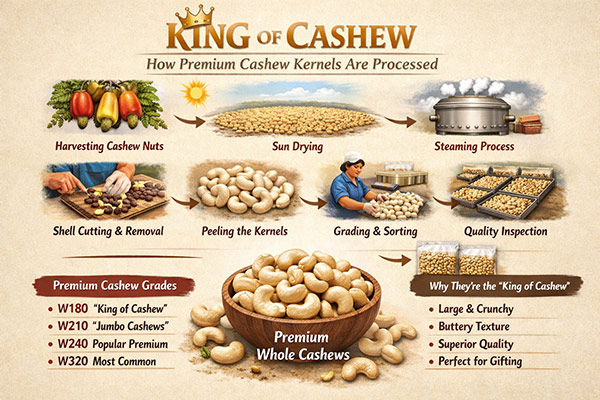
How Premium Cashew Kernels Are Processed Step-by-Step
The cashew nut is widely celebrated as the “King of Cashew” or the “King of Dry Fruits” due to its rich, buttery flavor and its unparalleled versatility in the kitchen. Unlike other nuts that may have a more woody or earthy profile, premium cashew kernels offer a creamy texture that enhances everything from traditional sweets to modern vegan delicacies. This royal status is not just about taste; it is about the global prestige these nuts hold as a high-value commodity in the international food market.
Proper processing is the most critical factor in determining the quality, taste, and safety of the final product. A single error during the roasting or shelling stage can damage the kernel, reducing a premium whole piece to a lower-grade broken fragment. To truly appreciate why these nuts are so highly regarded, one must understand the meticulous step-by-step journey involved in cashew processing. This guide explores how raw nuts are transformed into the high-quality whole cashew kernels found on premium store shelves.
What Are Premium Whole Cashew Kernels?
In the cashew industry, “Premium” refers to kernels that have remained completely intact throughout the extraction and peeling process. A premium cashew kernel is a whole, kidney-shaped nut that is free from cracks, blemishes, or discoloration. These are the most sought-after forms of the nut because they offer the best crunch and the most aesthetically pleasing appearance for high-end culinary use.
The most popular premium grades include:
- W180: Known as the “King of Cashew,” these are the largest and most expensive kernels.
- W210: Often called “Jumbo” cashews, these are slightly smaller but still very large.
- W240: A very popular premium grade used in high-quality snacks and gifts.
- W320: The most common international standard for whole cashews, offering a balance of size and value.
Step-by-Step Processing of Premium Whole Cashew Kernels
The transformation of a raw, shell-on cashew into a smooth, white kernel involves several labor-intensive stages. Each step is designed to protect the integrity of the kernel while removing the tough, caustic outer shell.
Harvesting of Cashew Nuts
The process begins in the orchard, where the cashew tree produces a unique fruit known as the cashew apple. Attached to the bottom of this fleshy, bright-colored apple is the raw cashew nut, protected by a hard, greyish shell. During the harvest season, the ripe fruits fall to the ground. Farmers collect these fallen fruits and manually separate the raw nut from the apple. At this stage, the nut is still encased in a shell containing CNSL (Cashew Nut Shell Liquid), which is highly acidic and must be handled with care.
Drying the Raw Cashew Nuts
Once harvested, the raw nuts are spread out on large concrete floors to undergo sun drying. This is a crucial step in cashew processing because it reduces the moisture content from approximately 25% down to 8% or 9%. Reducing the moisture ensures that the nuts do not spoil during storage and prepares the shell to be brittle enough for the next stage of processing. Properly dried nuts are essential for achieving a clean break during shelling.
Roasting or Steaming Process
To make the hard outer shell easier to remove, the raw nuts must be heat-treated. In modern premium processing facilities, steaming is the preferred method over open-fire roasting. Steaming involves placing the nuts in high-pressure cookers for a specific duration. This softens the shell and loosens the kernel inside without burning the nut. This gentle heat treatment is vital for maintaining the natural ivory color of premium cashew nuts.
Shell Cutting and Kernel Removal
After steaming, the nuts are allowed to cool before the shelling process begins. This is perhaps the most delicate stage. Using specialized manual or semi-automatic shell-cutting machines, the outer casing is cracked open. The goal is to remove the shell while keeping the kernel inside 100% intact. Skillful operators or precise machinery ensure that the pressure is just right; too much pressure results in broken pieces, while too little fails to release the kernel.
Drying and Peeling
Once the shells are removed, the kernels are still covered in a thin, reddish-brown skin called the testa. To remove this skin, the kernels are dried in industrial ovens (Borma) at a low temperature for several hours. This drying process makes the skin brittle and easy to peel. After cooling, the skin is removed either manually or by using air-pressure peeling machines, revealing the beautiful, creamy-white whole cashew kernels underneath.
Grading of Cashew Kernels
After peeling, the kernels are sorted into various cashew kernel grades. This is usually done in a climate-controlled environment to prevent the nuts from absorbing moisture. Workers or automated optical sorters categorize the nuts based on their size, shape, and color. Only the largest, whitest, and most perfect whole pieces are selected for the premium categories like W180 and W240. Any discolored or broken pieces are separated for use in different food industries.
Quality Checking and Sorting
Premium quality is guaranteed through rigorous inspection. At this stage, the kernels undergo a final round of manual and machine inspection. Any kernels with slight skin traces, spots, or irregular shapes are removed. This ensures that every nut in a premium pack meets the strict export quality standards that buyers expect from the “King of Cashew.”
Hygienic Packaging
The final step is to preserve the freshness and crunch of the kernels. Exposure to air and moisture is the enemy of a fresh cashew. Premium cashew kernels are typically packed using vacuum-packing technology or Nitrogen flushing. This removes oxygen from the packaging, preventing the natural oils in the cashews from turning rancid. Using food-grade, multi-layered pouches or tins ensures that the product reaches the consumer in peak condition.
Why Processing Quality Matters in Premium Cashews
The quality of processing directly impacts the consumer experience. High-quality processing ensures a better taste, as the natural sweet and buttery flavor of the cashew is preserved without any burnt or “off” notes. It also results in a better shelf life, as proper drying and vacuum sealing prevent spoilage.
Furthermore, safety and hygiene are paramount. Modern processing facilities follow strict food safety guidelines to ensure the product is free from contaminants. For wholesalers and exporters, meeting these quality standards is essential for maintaining their reputation in the competitive global market.
Why Premium Whole Cashews Are Called the “King of Cashew”
The title “King of Cashew” is reserved for the finest whole kernels. Their large size makes them a visually stunning addition to any food presentation. Beyond looks, they offer a rich taste and texture that is superior to smaller or broken grades. Because they are packed with healthy fats, proteins, and minerals, they offer high nutritional value, making them the ultimate functional food. This combination of luxury and health is why there is such high global demand for premium cashew nuts.
Uses of Premium Cashew Kernels
Because of their superior quality, these kernels are used in a variety of ways:
- Healthy Snacks: Often roasted with a touch of salt or spices for a premium snacking experience.
- Sweets and Desserts: Used in traditional recipes like Kaju Katli or as a garnish for high-end cakes.
- Bakery Products: Incorporated into gourmet cookies, chocolates, and pastries.
- Cooking and Gravies: Blended into rich, creamy sauces for restaurant-quality curries.
- Premium Gifting: Featured in decorative boxes for weddings, festivals, and corporate events.
Conclusion
The journey of a cashew from a raw seed on a tree to a premium snack is a testament to the art of food processing. Every step, from sun drying to vacuum packaging, requires immense care to protect the nut’s integrity. High-quality processing ensures that consumers receive the best cashew products—those that are not only delicious but also safe and highly nutritious.
Premium cashew kernels truly earn their title as the “King of Cashew” by providing a superior experience in every bite. Whether you are a wholesaler looking for the best export-grade nuts or a consumer looking for a healthy snack, understanding the processing journey helps you appreciate the true value of every whole kernel.
FAQ’s on King of Cashews
- Why is the premium whole cashew called the “King of Cashew”? It earns this title due to its massive size, buttery texture, and the intensive cashew processing required to keep the kernel perfectly intact and white.
- What do cashew kernel grades like W180 and W320 signify? These cashew kernel grades indicate the number of nuts per pound; a lower number like W180 means larger, more premium kernels valued for luxury gifting.
- Does the steaming process affect the nutritional value of the nut? Controlled steaming is a high-quality method that preserves the cashew kernels nutrition by loosening the shell without damaging the delicate, healthy fats inside.
- Why are whole cashew kernels preferred over broken pieces? Whole cashew kernels have less surface area exposed to air, giving them a longer shelf life and a more satisfying crunch than smaller, broken fragments.
- Is the liquid inside the raw cashew shell hazardous? Yes, the raw shell contains a caustic liquid (CNSL), which is why the roasting or steaming process is vital to safely extract the edible premium nut.
- How should premium cashew nuts be packaged for export? They must be vacuum-packed or nitrogen-flushed to prevent moisture absorption, ensuring the premium cashew kernels remain fresh and crunchy during global transit.