
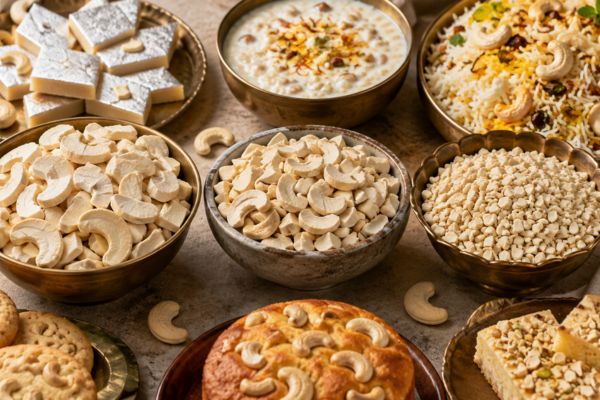
Broken Cashew Grades Explained: JK, LWP, SWP and Their Best Uses
Not every food recipe needs a whole cashew. In many commercial kitchens, sweet shops, bakeries, restaurants and catering businesses, broken cashews are more practical.
But all broken cashews are not the same.
Grades such as JK Cashew, LWP Cashew and SWP Cashew have different piece sizes and different uses. Choosing the correct grade can help improve food appearance, texture, mixing and ingredient planning.
Keshar Cashewnuts offers JK, LWP, SWP and several other broken cashew grades from its facility in Santej, Gujarat. The company also processes whole and split cashew grades for different food and commercial requirements.
This guide explains the main differences between JK, LWP and SWP Cashew, where each one works best, and how businesses can select the right grade.
What Are Broken Cashew Grades?
Broken cashew grades are pieces of cashew kernels that are sorted according to size and appearance.
Instead of using a complete whole kernel, businesses can choose a broken grade that matches the recipe.
For example:
- Large pieces for visible garnishing
- Medium pieces for bakery and gravies
- Smaller pieces for desserts, fillings and mixing
Keshar Cashewnuts currently lists several broken grades, including JK, K, LWP, SWP, SP, DP, SSP, SSP2 and BB Cashew.
The best grade depends on what the cashew needs to do inside the final food product.
Why Does Cashew Piece Size Matter?
Piece size affects more than appearance.
It can change:
- Texture
- Garnishing
- Mixing
- Portion control
- Visibility in the final dish
- Ease of use
- Recipe consistency
A large broken piece may work well on biryani, but it may be too large for cookie dough.
A small piece may mix well into chocolate or halwa, but it may not give the premium visible look needed for a luxury garnish.
That is why buyers should choose a broken grade according to the application rather than buying only by price.
What Is JK Cashew?
JK Cashew means Jumbo King Broken Cashew.
It contains comparatively large broken pieces and is the biggest of the three grades covered in this guide.
Keshar Cashewnuts describes its JK grade as large, bright-white pieces with a firm crunch and recommends it for premium garnishing, confectionery and other applications where the nut should remain clearly visible.
Best Uses of JK Cashew
JK Cashew can work well for:
- Biryani
- Pulao
- Premium sweets
- Halwa
- Luxury desserts
- Confectionery
- Dry fruit mixes
- Trail mixes
- Wedding catering
- Visible food garnishing
Why Choose JK?
Choose JK when you want people to see and feel larger cashew pieces in the final dish.
For example, if you are preparing a premium biryani, a large piece can remain visible after roasting and garnishing.
This makes JK useful where presentation matters.
Problem: Small Cashew Pieces Disappear in the Dish
A common problem in large dishes is that small cashew pieces become difficult to see after cooking or mixing.
Better Option
Use JK Cashew when visible nut pieces are important.
It can be a practical choice for:
Wedding Biryani → Festive Sweets → Premium Garnish → Dry Fruit Mix
Keshar’s JK product page specifically positions the grade for biryani, rich pulao, festive sweets and premium garnishing.
What Is LWP Cashew?
LWP means Large White Pieces.
Keshar Cashewnuts identifies LWP as a 4-piece broken cashew grade, with large and fairly uniform white pieces. It is intended for applications that need visible cashew texture but smaller pieces than JK or larger split formats.
LWP sits between large JK pieces and smaller SWP pieces.
Best Uses of LWP Cashew
LWP can be useful for:
- Bakery products
- Indian gravies
- Biryani
- Sweets
- Cookies
- Cakes
- Desserts
- Catering dishes
- Confectionery
- Food manufacturing
Keshar Cashewnuts recommends LWP for applications such as garnishing biryani, thickening rich gravies and premium baking.
Why LWP Is a Flexible Grade
LWP gives a good balance between:
Visible Texture + Easy Mixing
The pieces are large enough to notice, but not so large that they become difficult to distribute through a recipe.
For example:
In Bakery Products
LWP can be added to:
- Cookies
- Cakes
- Muffins
- Brownies
The pieces can remain noticeable after baking.
In Gravies
LWP can be used where the recipe needs cashew pieces or where they will later be processed into a richer base.
In Catering
It can work well when a chef needs a medium-large broken grade for several menu items.
Why SWP Works Well for Mixing
Because SWP pieces are smaller, they can spread more evenly through a mixture.
This is helpful when every portion should contain some cashew.
For example:
Cookie Dough
Smaller pieces can spread through the dough more evenly.
Halwa
SWP can provide nut texture without creating very large pieces in each serving.
Chocolate
Smaller fragments can be easier to mix into chocolate products.
Ice Cream
SWP can work as a topping or mix-in where small pieces are preferred.
JK vs LWP vs SWP Cashew
Here is a simple comparison:
| FEATURE | JK CASHEW | LWP CASHEW | SWP CASHEW |
|---|---|---|---|
| Full Form | Jumbo King Broken | Large White Pieces | Small White Pieces |
| Relative Piece Size | Large | Medium-Large | Small |
| Keshar Grade Description | Jumbo broken pieces | 4-piece broken | 8-piece broken |
| Visibility in Food | Very High | High | Medium |
| Best for Garnishing | Excellent | Very Good | Limited |
| Best for Baking | Good | Excellent | Excellent |
| Best for Mixing | Moderate | Good | Excellent |
| Best for Biryani | Excellent | Very Good | Less suitable for visible garnish |
| Best for Gravies | Can be used | Very Good | Excellent |
| Best for Desserts | Very Good | Very Good | Excellent |
The 4-piece and 8-piece descriptions above come from Keshar’s current LWP and SWP product specifications.
Which Broken Cashew Grade Is Best for Biryani?
For biryani, visible garnish is usually important.
Recommended:
JK Cashew – when you want large premium pieces.
LWP Cashew – when you want visible pieces but a slightly smaller format.
SWP may still add cashew flavour and texture, but it is less useful if the main goal is a large visible garnish.
Keshar specifically recommends JK for biryani and LWP for biryani garnishing.
Why SWP Works Well for Mixing
Because SWP pieces are smaller, they can spread more evenly through a mixture.
This is helpful when every portion should contain some cashew.
For example:
For Premium Visible Garnishing
Choose:
JK or LWP
Suitable for:
- Halwa
- Barfi
- Festive sweets
- Dessert platters
For Mixing Inside the Sweet
Choose:
LWP or SWP
Suitable for:
- Halwa
- Sweet fillings
- Dry fruit mixtures
- Confectionery
For Smaller Even Pieces
Choose:
SWP
This can work when the cashew needs to spread throughout the recipe.
Which Grade Is Better for Bakery Products?
Bakery products usually need easier distribution.
For many bakery applications:
LWP
Useful when visible nut pieces are desired.
SWP
Useful when smaller pieces need to spread through:
- Cookies
- Cakes
- Brownies
- Chocolate
- Dough
- Fillings
Keshar specifically positions LWP for premium baking and SWP for batter, dough, cookies and chocolate-style applications.
Why Broken Cashews Can Be Practical for Commercial Kitchens
Commercial kitchens often prepare large batches.
Broken cashew grades can offer useful flexibility because the kitchen can choose the exact piece size needed for the recipe.
Benefits may include:
- Less manual cutting
- Easier mixing
- Better portion control
- Easier garnishing
- Better match with the recipe
- More practical use of different grades
The key is not to think of broken cashew as “lower quality.”
Instead, think of it as a different format for a different food use.
JK, LWP and SWP are all designed for different applications.
How to Store Broken Cashew Nuts
Broken cashews should be stored carefully because more cut surfaces are exposed compared with a whole kernel.
For business use:
- Keep packs properly sealed
- Store in a cool and dry place
- Keep away from moisture
- Avoid strong-smelling materials
- Keep away from direct heat
- Use clean storage containers
- Follow supplier storage guidance
- Rotate older stock first
Good storage helps maintain the taste and texture expected from the selected grade.
Broken Cashew Supplier in Gujarat
Keshar Cashewnuts operates from Santej-Khatraj Road, Santej, Gujarat, and describes itself as a cashew importer, processor, manufacturer and supplier. The company’s current range includes whole, split and broken grades for wholesalers, retailers, distributors and other buyers.
For businesses looking for a Broken Cashew Supplier in Gujarat, having access to JK, LWP, SWP and additional grades makes it easier to select products according to food application rather than using one grade for every recipe.
Why Choose Keshar Cashewnuts for Broken Cashew Grades?
Keshar Cashewnuts began operations in 2016 and currently offers a broad range of cashew kernels, including multiple whole, split and broken varieties. The company states that its cashews are processed, graded and inspected before supply.
Its broken-cashew range includes:
- JK Cashew
- K Cashew
- LWP Cashew
- SWP Cashew
- SP Cashew
- DP Cashew
- SSP Cashew
- SSP2 Cashew
- BB Cashew
Final Thoughts
Understanding Broken Cashew Grades makes buying much easier.
The main difference between JK, LWP and SWP is the size of the broken pieces and how they behave in food.
Remember this simple rule:
JK → Large and visible
LWP → Medium-large and flexible
SWP → Small and easy to mix
JK works well for premium garnishing and biryani. LWP gives a balance of visible texture and easy use in gravies and bakery applications. SWP is better where smaller pieces need to spread through desserts, dough, gravies or confectionery.
For food businesses in Ahmedabad, Gujarat and other markets, selecting the right cashew grade can help improve presentation, recipe consistency and kitchen efficiency.
Need help selecting JK, LWP, SWP or another broken cashew grade? Contact Keshar Cashewnuts with your application and quantity requirement to choose a suitable option.
FAQs – JK, LWP and SWP Broken Cashew Grades
JK stands for Jumbo King Broken Cashew. It consists of large broken pieces and is suited to premium garnishing, biryani, pulao, sweets and confectionery.
LWP means Large White Pieces. Keshar describes it as a 4-piece broken grade suitable for garnishing, gravies and baking.
SWP means Small White Pieces. Keshar describes it as an 8-piece broken grade suitable for gravies, confectionery, desserts, baking and recipes that need smaller evenly distributed pieces.
JK is a strong choice when large visible pieces are required. LWP can also work well when slightly smaller pieces are preferred.
LWP works well where visible pieces are needed, while SWP is useful when smaller pieces should mix evenly into doughs, batters and fillings.
Yes. Its smaller size makes it useful in halwa, dessert mixtures and other applications where even distribution is preferred.
JK is generally the strongest choice among these three when the goal is large and clearly visible cashew pieces.
Yes. Keshar lists rich gravies among the recommended applications for LWP Cashew.